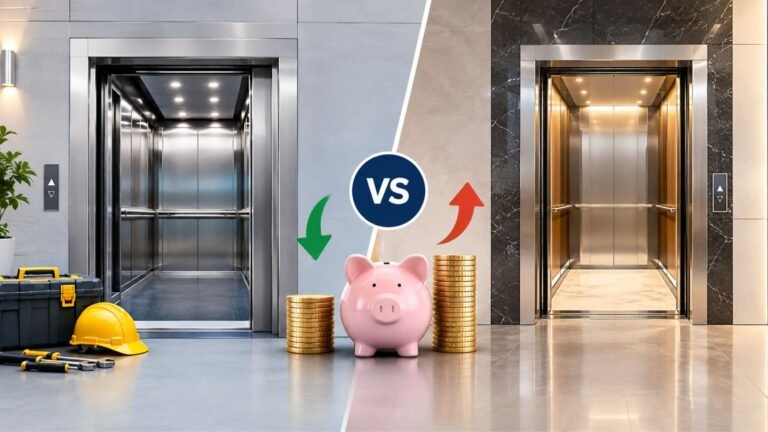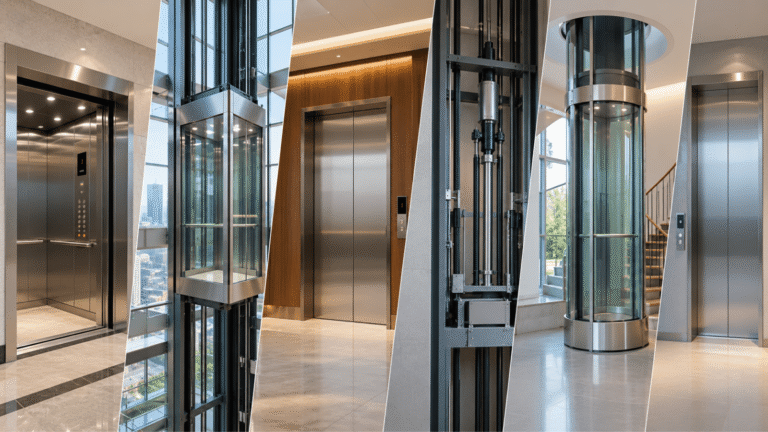
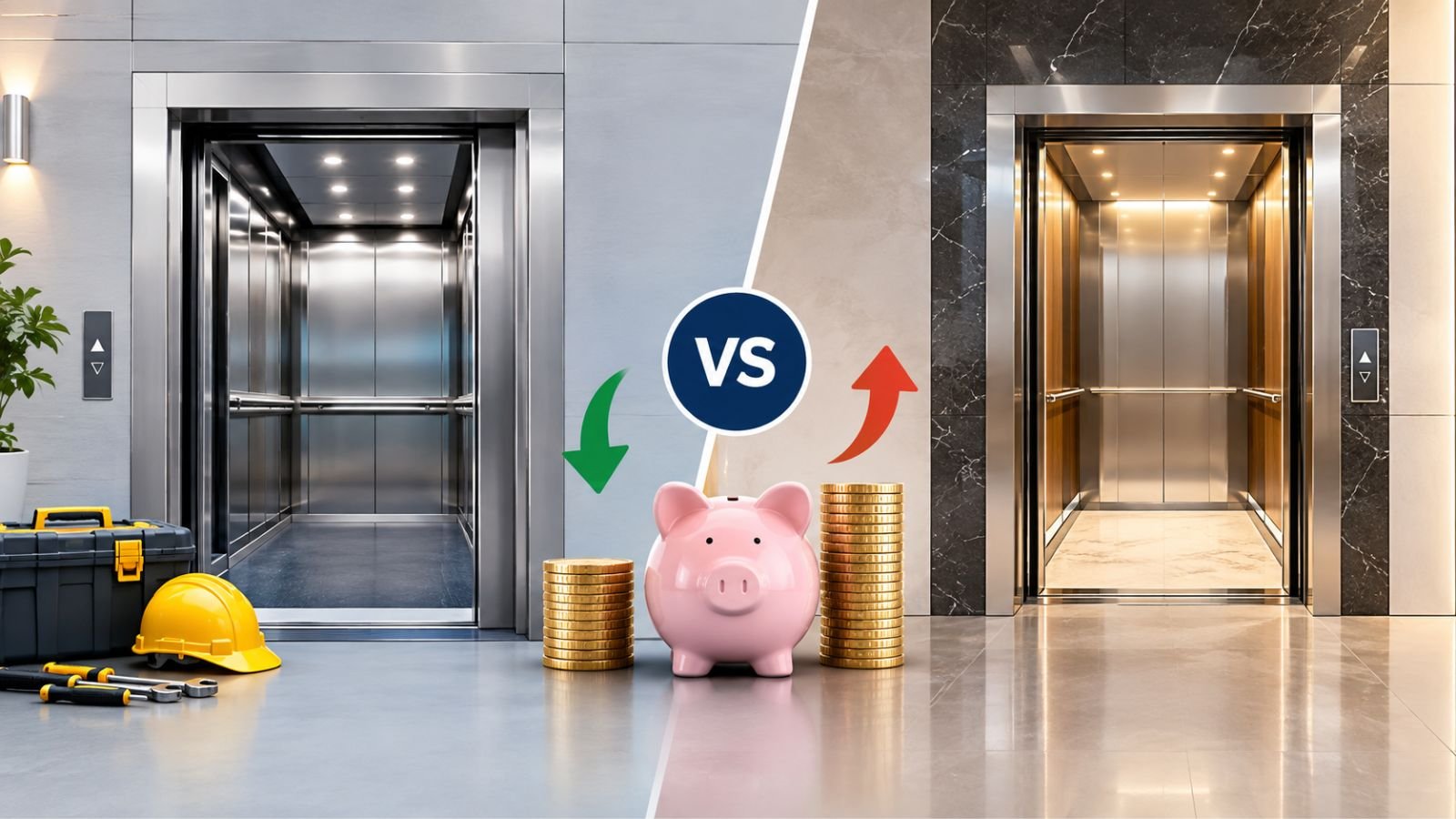
Elevators are essential building systems that require regular maintenance, inspections, and timely upgrades to remain safe, efficient, and reliable. As an elevator gets older, building owners often need to decide whether elevator modernization or complete elevator replacement is the right solution for their property.
The right choice depends on factors such as the elevator’s age, condition, breakdown frequency, safety requirements, energy efficiency, availability of spare parts, building usage, and long-term operating costs. While elevator modernization can improve the performance and reliability of an existing system, older or severely outdated elevators may require full replacement.
At Aurum Elevators, we provide reliable elevator modernization, repair, maintenance, and replacement solutions tailored to residential, commercial, and industrial buildings.
What is Elevator Modernization?
Elevator modernization involves upgrading selected components of an existing elevator system rather than replacing the entire installation.
Depending on the condition of the elevator, modernization may include:
- Controller replacement
- Drive system upgrades
- Door operator upgrades
- New control panels
- Safety component improvements
- Cabin interior upgrades
- Energy-efficient lighting
- Improved communication systems
- Replacement of outdated electrical components
- Upgrades to operating and monitoring systems
Professional elevator modernization services can help improve an elevator’s reliability, ride quality, safety features, and operational performance while retaining usable parts of the existing system.
Modernization is particularly relevant when the elevator structure, shaft, cabin, and major mechanical components remain suitable for continued operation.
What is Elevator Replacement?
Elevator replacement involves removing an existing elevator system and installing a new system. This can involve replacing the cabin, controller, drive system, doors, machinery, electrical components, and other major equipment.
A complete replacement may be considered when:
- The elevator is extremely old
- Major components are obsolete
- Spare parts are difficult to obtain
- Breakdowns are frequent
- Repair costs continue increasing
- Existing equipment cannot meet current requirements
- The elevator has significant performance limitations
- The building requires substantially different capacity or performance
Replacement can provide a new system designed around the current requirements of the building.
However, it may involve greater installation work, downtime, structural modifications, and initial investment than targeted modernization.
Elevator Modernization vs. Replacement: Key Differences
Modernization and replacement can both improve elevator performance, but they involve different levels of work and investment.
| Factor | Elevator Modernization | Elevator Replacement |
| Scope of work | Selected components are upgraded | Major or complete system is replaced |
| Initial investment | Often lower than full replacement | Generally higher |
| Installation time | May be shorter depending on scope | Can require more extensive work |
| Existing equipment | Some components are retained | Most major components are replaced |
| Performance improvement | Depends on upgraded components | New system can provide broader improvements |
| Building modifications | Usually more limited | May require greater modifications |
| Long-term solution | Depends on remaining equipment | Provides a new elevator system |
| Suitable for | Systems with usable existing infrastructure | Severely outdated or unsuitable systems |
The right choice should be based on the actual condition of the elevator rather than simply comparing the initial quotation.
Which Option Saves More Money?
There is no universal answer because the lower-cost option initially may not always produce the lowest total cost over the elevator’s remaining operating life.
Modernization can save money when the existing elevator has a sound structure and several major components can continue operating reliably. Instead of replacing the complete system, building owners can upgrade the components that are causing performance, safety, or efficiency problems.
Replacement may make more financial sense when an elevator has widespread component failures, obsolete technology, repeated breakdowns, or expensive maintenance requirements.
The total cost should therefore include more than the installation price.
Consider:
- Initial project cost
- Maintenance expenses
- Energy consumption
- Breakdown frequency
- Spare-part availability
- Downtime
- Expected service life
- Future modernization requirements
- Building usage
- Safety and compliance requirements
When is Elevator Modernization a Better Option?
Modernization can be considered when the existing elevator remains structurally and mechanically suitable but certain systems have become outdated.
1. The Elevator Has Frequent Breakdowns
Repeated breakdowns can increase maintenance expenses and cause inconvenience for building occupants. Upgrading outdated controllers, drives, door systems, or other components may improve reliability.
2. Replacement Parts Are Becoming Difficult to Find
Older elevator systems can use components that are no longer commonly manufactured. This can increase repair time and maintenance costs.
Modernization can replace obsolete components with currently supported equipment.
3. Ride Quality Has Declined
Jerky starts, rough stops, excessive vibration, or inconsistent door operation can indicate aging equipment.
Modern drive and control systems may improve acceleration, deceleration, leveling, and overall ride performance.
4. Energy Efficiency Is a Concern
Older elevator equipment may consume more energy than newer technologies.
Upgrading drives, motors, lighting, controls, and standby systems can potentially improve operating efficiency depending on the existing system and usage pattern.
5. The Building Still Meets Current Capacity Requirements
If the elevator’s capacity, shaft dimensions, and overall configuration remain suitable for the building, complete replacement may not always be necessary.
A targeted modernization project may address the major performance problems while retaining suitable infrastructure.
When Should You Consider Elevator Replacement?
Replacement may be appropriate when modernization cannot adequately address the condition or requirements of the existing elevator.
1. The System Is Severely Outdated
Some older elevators may have multiple obsolete components. Replacing one component at a time may provide only temporary improvements.
In such situations, a new elevator system may offer a more comprehensive long-term solution.
2. Repair Costs Keep Increasing
If the elevator requires frequent repairs and expensive components, continuing to maintain the old system can become difficult to justify financially.
Building owners should compare projected repair and maintenance costs with the investment required for a new elevator.
3. The Elevator Cannot Meet Current Requirements
A building may change over time. Increased occupancy, renovation, accessibility requirements, or changes in building use can create new transportation requirements.
A replacement elevator can be designed around updated capacity, speed, safety, accessibility, and operational needs.
4. Major Components Have Reached the End of Their Service Life
If the controller, motor, drive, doors, safety systems, and other major components are all approaching the end of their useful service life, replacing the system may provide a more practical long-term approach.
How Does Maintenance Affect Elevator Costs?
Regular maintenance plays an important role in controlling the long-term cost of elevator ownership.
Professional elevator service and maintenance in India can include routine inspections, preventive maintenance, component checks, safety-system inspections, lubrication where applicable, adjustment of operating components, breakdown assistance, and replacement of worn parts.
Regular maintenance can help identify developing problems before they become major failures.
Building owners should consider:
- Preventive maintenance
- Routine inspections
- Emergency breakdown support
- Spare-part availability
- Safety checks
- Technical troubleshooting
- Component replacement
- Long-term modernization planning
A properly maintained elevator may provide reliable service for many years, while poor maintenance can accelerate component wear and increase unexpected repair costs.
Does Modernization Improve Elevator Safety?
Modernization can provide an opportunity to upgrade outdated safety-related equipment and operating systems.
Depending on the elevator and project requirements, upgrades may include:
- Improved door sensors
- Updated control systems
- Emergency communication
- Automatic rescue systems
- Improved leveling
- Safety brakes and related components
- Emergency lighting
- Overload protection
- Updated monitoring systems
However, modernization should be planned following a professional inspection and applicable technical requirements. Not every older elevator can be made suitable simply by replacing one component.
Modernization vs. Replacement: Cost Factors to Consider
Before choosing an option, building owners should look beyond the quoted project price.
1. Initial Investment
Modernization may require a smaller initial investment when only selected components need to be upgraded. Replacement usually involves a larger project because more equipment is removed and installed.
2. Maintenance Costs
An older elevator may continue requiring repairs even after partial modernization if other aging components remain in service.
A new elevator can reduce the number of obsolete components, although it still requires regular maintenance.
3. Downtime
Modernization can sometimes reduce downtime compared with a complete replacement, depending on the project scope.
However, major modernization projects can also require significant shutdown periods.
4. Energy Costs
Modern motors, drives, lighting, and control systems may provide improved energy efficiency. Actual savings depend on elevator technology, building traffic, operating frequency, and equipment specifications.
5. Spare Parts
Parts availability can affect both cost and downtime. An outdated elevator that relies on difficult-to-source components may become increasingly expensive to maintain.
Why Choosing the Right Elevator Company Matters
Whether a building requires modernization, maintenance, repair, or a new installation, the experience of the elevator company can influence the project.
When evaluating an elevator manufacturing company, consider:
- Manufacturing capabilities
- Engineering experience
- Product range
- Installation expertise
- Modernization capabilities
- Maintenance support
- Spare-parts availability
- Technical assistance
- Safety-focused processes
- After-sales service
For residential projects, working with an experienced home elevators company can also help ensure that the selected system matches the available space, passenger requirements, design preferences, and operating conditions.
For local service requirements, building owners may also look for an experienced elevator repair company that can provide timely technical assistance, troubleshooting, component replacement, and maintenance support.
Interesting Read: How to Choose the Right Elevator Manufacturing Company for High-Rise Buildings
Why Choose Aurum Elevators for Modern Elevator Solutions?
Aurum Elevators provides elevator solutions for residential, commercial, and other building applications. Our services can support different stages of the elevator lifecycle, from new installation and manufacturing to maintenance, repair, and modernization.
Our support can include:
- Elevator manufacturing
- Passenger elevators
- Home elevators
- Lift modernization
- Elevator repair
- Maintenance services
- Installation support
- Technical assistance
- Custom elevator solutions
- Long-term after-sales support
The right solution depends on the building, existing equipment, usage requirements, and long-term operational goals.
Final Thoughts
Choosing between elevator modernization and replacement requires more than comparing two project quotations. The condition of the existing elevator, maintenance history, component availability, energy efficiency, safety requirements, building usage, and expected future needs should all be considered.
Modernization may be suitable when the existing elevator has a usable structure and only specific components require upgrading. Replacement may be considered when the system is extensively outdated, major components are failing, or the existing configuration cannot meet current requirements.
A professional inspection and lifecycle cost assessment can help building owners understand which approach is appropriate for their specific elevator.
If your elevator requires modernization, maintenance, repair, or a new installation, consult an experienced elevator professional to assess the existing system and discuss suitable options.
Frequently Asked Questions About Elevator Modernization and Replacement
Is elevator modernization cheaper than replacement?
Modernization can have a lower initial cost when only selected components need to be upgraded. However, the total cost depends on the condition of the existing elevator, the scope of modernization, future maintenance requirements, and the expected remaining service life.
How often should an elevator be modernized?
There is no single modernization interval that applies to every elevator. The decision depends on equipment age, condition, technology, maintenance history, breakdown frequency, spare-part availability, safety requirements, and building usage.
When should an old elevator be replaced?
Replacement may be considered when an elevator has widespread equipment deterioration, frequent breakdowns, obsolete components, increasing repair costs, or an inability to meet the building’s current requirements.
Can modernization improve elevator performance?
Yes. Depending on the existing equipment, modernization can improve areas such as ride quality, door operation, leveling, controls, energy efficiency, and reliability.
How important is lift maintenance in India?
Regular lift maintenance is important for supporting safe and reliable elevator operation. Maintenance schedules should consider manufacturer recommendations, applicable requirements, equipment condition, and actual usage.
What should I look for in an elevator manufacturing company?
Consider manufacturing capabilities, engineering expertise, installation experience, product range, safety processes, spare-parts availability, maintenance services, technical support, and after-sales assistance.
Is modernization suitable for home elevators?
Modernization can be considered for an existing home elevator when the system remains suitable but specific components or features require upgrading. An assessment should determine whether modernization or replacement is more appropriate.